
The Cost Benefits of Virtual Staging for Realtors and Home Sellers
Selling a home involves more than putting a property on the market. You need attractive photographs, effective advertising, and a presentation that helps potential buyers imagine themselves living there. But how much should you spend to make a property look its best?
Traditional home staging can involve furniture rentals, delivery, setup, removal, and professional styling. These expenses may not suit every seller, especially when the property is vacant, newly built, or being marketed on a limited budget.
Virtual staging offers another option. By adding realistic digital furniture and décor to property photographs, you can improve the visual presentation without physically furnishing the home.
Could this approach help you manage your real estate marketing budget more effectively? Let’s explore the potential cost benefits, practical applications, and important limitations of virtual staging.
Why Home Staging Costs Matter When Selling a Property
First impressions matter. When buyers browse property listings, photographs often determine whether they stop scrolling or move on to the next home.
A beautifully presented room can help communicate comfort, function, and lifestyle. However, preparing that room physically can require time and money.
The Expenses Associated With Traditional Home Staging
Traditional staging may include several separate costs:
-
Furniture and décor rentals
-
Delivery and pickup fees
-
Professional staging services
-
Furniture installation and arrangement
-
Accessory rental
-
Storage and coordination
The final expense depends on the property size, location, number of rooms, rental period, and staging company.
For example, staging a single living room is a different project from furnishing an entire three-bedroom home. If the property remains on the market for an extended period, rental-related costs may also increase.
Why Sellers and Realtors Consider Flexible Alternatives
Not every property needs physical furniture. A vacant investment property, a newly constructed home, or a house being marketed to buyers in another city may benefit from digitally staged images.
Think of virtual staging as a digital showroom. Instead of moving furniture into the property, you show buyers how the space could look when furnished.
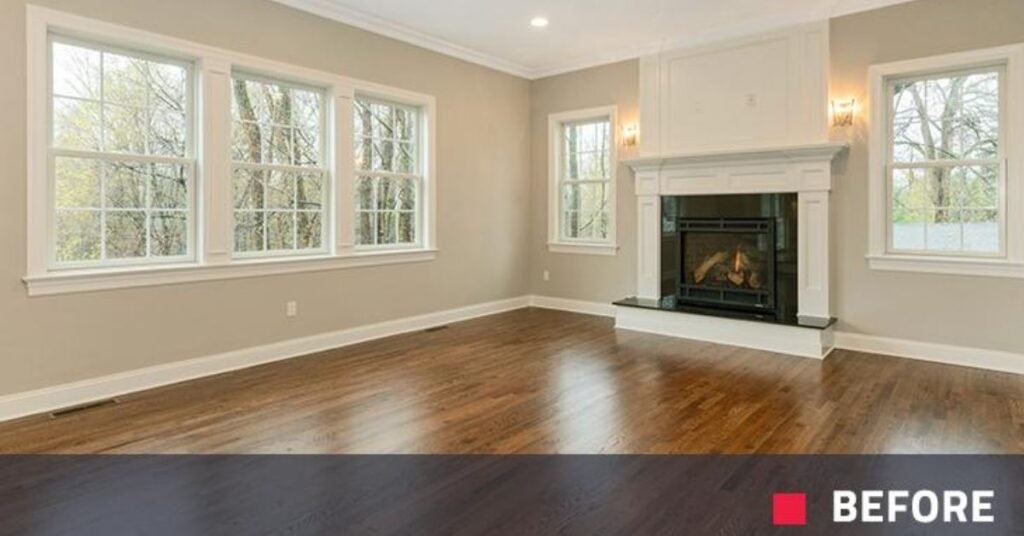
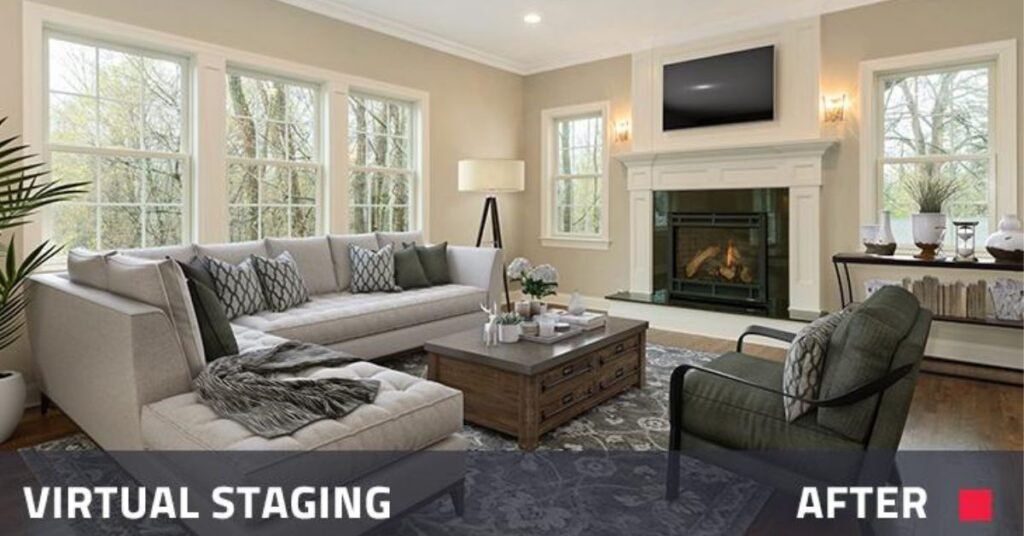
An empty room and a digitally furnished version can communicate very different impressions.
What Is Virtual Staging and How Does It Work?
Virtual staging uses digital editing software or AI-based tools to add furniture, rugs, artwork, lighting adjustments, and other decorative elements to property photographs.
The original photograph remains the foundation. A professional editor or staging tool then creates a furnished version while attempting to preserve the room’s architecture and perspective.
How Digital Furniture Is Added to Property Photos
A typical workflow may involve:
-
Uploading a clear photograph of the room.
-
Selecting a design style, such as modern, Scandinavian, or traditional.
-
Adding appropriately scaled furniture and décor.
-
Reviewing the image for realism and accuracy.
-
Requesting corrections if needed.
The quality of the final image depends on the source photograph, editing technology, furniture placement, and review process.
Virtual Staging Versus Traditional Staging
The two methods serve similar marketing purposes but use different approaches.
|
Feature |
Virtual Staging |
Traditional Staging |
|---|---|---|
|
Physical furniture |
Not required |
Required |
|
Delivery and removal |
Generally unnecessary |
Usually required |
|
Design flexibility |
Often high |
Depends on available inventory |
|
Buyer experience |
Digital images |
Physical viewing experience |
|
Best use |
Online marketing visuals |
Open houses and in-person presentation |
Virtual staging does not replace every benefit of physical staging. Buyers cannot walk through digitally furnished rooms, sit on the furniture, or experience the actual layout in person.
The right choice depends on your property, budget, and marketing goals.
How Virtual Staging Can Reduce Property Marketing Expenses
One of the main cost benefits of virtual staging is that it reduces the need for physical furniture and the logistics associated with it.
No Furniture Rental or Delivery Costs
With virtual staging, you can create furnished photographs without transporting sofas, beds, tables, chairs, and accessories into the property.
This can be particularly useful when you need to market a vacant home quickly. Instead of coordinating furniture delivery, you can focus on producing accurate and attractive listing images.
However, remember that virtual staging still has a service cost. The potential savings depend on the provider’s pricing, the number of images, and the complexity of the project.
Stage Multiple Rooms Digitally
You may want to show a living room, primary bedroom, dining area, home office, and basement in your listing.
Physically furnishing every room can require additional furniture and labor. Virtual staging allows you to prepare images for several spaces using digital designs.
This can help you create a more complete visual story. Rather than showing only an empty house, you can demonstrate how different rooms might function.
Change Design Styles Without Physically Redecorating
What if you want to show the same living room in two different styles?
With virtual staging, you may be able to create a contemporary version and a traditional version without renting a second set of furniture. Some providers also offer revisions or alternate designs for an additional fee.
This flexibility can be useful when marketing a property to different audiences. Just make sure the design remains realistic and does not hide important architectural features.
Virtual Staging for Vacant Homes and New Construction Properties
Vacant properties often look larger in photographs, but they can also feel cold or difficult to understand. Buyers may struggle to imagine where furniture would fit.
Helping Buyers Understand Empty Rooms
A carefully staged image can provide visual clues about a room’s purpose.
For example:
-
A sofa and coffee table can show how a living room might be arranged.
-
A bed and nightstands can demonstrate bedroom proportions.
-
A desk can illustrate the potential use of a home office.
-
A dining table can help define an open dining area.
Furniture must be correctly scaled. An oversized sofa in a small room can create a misleading impression and reduce buyer confidence.
Showcasing New Construction Before Move-In
Builders and developers can use virtual staging to market properties before buyers move in.
A newly completed home may have clean finishes but no furniture, artwork, or accessories. Digital staging can help communicate the lifestyle associated with the space.
For example, you might show a bright, modern living room, a comfortable family room, or a minimalist primary bedroom.

Virtual staging can help prospective buyers visualize how an unfurnished new home might look when occupied.
Presenting Multiple Design Possibilities
One property can support several visual concepts. You could present a room in a modern, coastal, minimalist, or transitional style.
This does not mean every style will appeal to every buyer. Instead, it gives you a way to test different visual approaches while keeping the underlying property consistent.
How Realtors Can Use Virtual Staging to Manage Their Marketing Budget
Realtors often need to balance professional presentation with the costs of serving multiple clients.
Producing More Attractive Listing Images
High-quality photographs are essential, but an empty room may not communicate its full potential.
Virtual staging can help you present a furnished concept while preserving the room’s actual structure. The resulting image may be used alongside original photographs to give buyers a more complete understanding of the property.
Use both types of images when appropriate. Original photographs establish transparency, while staged images illustrate possible furnishing ideas.
Repurposing Images Across Marketing Channels
A digitally staged image can potentially support several marketing activities:
-
Real estate listing platforms
-
Your professional website
-
Social media posts
-
Email campaigns
-
Online advertising
-
Property brochures
Before reusing an image, check the requirements of the platform, brokerage, and applicable professional standards.
Offering Virtual Staging as Part of Your Listing Service
You might include a limited number of virtually staged images in a marketing package or offer the service as an optional upgrade.
For example, your package could specify:
-
Two staged images for a vacant property
-
One primary room redesign
-
A defined turnaround period
-
A stated number of revisions
Clear terms help sellers understand what they are paying for and prevent confusion about additional charges.
Is Virtual Staging Always Cheaper Than Traditional Staging?
Virtual staging can be more affordable in some situations, but it is not automatically the least expensive option for every property.
Factors That Influence Virtual Staging Costs
Pricing may depend on:
-
Number of photographs
-
Number of rooms
-
Image resolution
-
Editing complexity
-
Furniture and décor requirements
-
Turnaround time
-
Revision requests
-
Provider experience
A basic living room image may require less work than a photograph with unusual angles, reflections, complicated architecture, or extensive editing requirements.
Compare the complete package instead of focusing only on the lowest advertised price.
When Traditional Staging May Be More Suitable
Physical staging may be useful when buyers will visit the property in person and need to experience the furnished environment.
It may also be appropriate for:
-
Luxury properties
-
Homes requiring extensive styling
-
Open houses
-
Properties where furniture placement affects buyer movement
-
Sellers who want a fully furnished presentation
Virtual staging and traditional staging can also work together. You might physically stage key rooms and digitally furnish other spaces.
Common Mistakes That Can Reduce the Value of Virtual Staging
Virtual staging only works well when the final images remain believable and accurate.
Using Incorrect Furniture Scale
A bed that is too large or a sofa that blocks a walkway can make a room look distorted.
Ask your staging provider to preserve realistic proportions, perspective, and clear walking paths.
Changing the Property’s Actual Architecture
Digital staging should not add or remove permanent features in a misleading way.
Doors, windows, walls, stairs, room boundaries, and kitchen cabinets should remain accurate. Never use staging to suggest that a property has features it does not actually contain.
Failing to Identify Virtually Staged Images
Transparency matters. Clearly identify digitally staged photographs where required or appropriate.
A buyer should be able to distinguish between the property’s current condition and a visual representation of how it could look with furniture.
How to Evaluate Whether Virtual Staging Is Worth the Investment
Before purchasing a service, consider the complete marketing objective.
Compare Total Costs
Compare virtual staging with physical staging, including photography, delivery, rental duration, setup, removal, and revisions.
You should also consider how many images you need. Staging one important room may be more practical than digitally furnishing every photograph.
Monitor Marketing Performance
After publishing your listing, monitor available performance indicators:
-
Listing views
-
Image engagement
-
Social media interactions
-
Buyer inquiries
-
Showing requests
-
Feedback from sellers and prospective buyers
Staging is only one part of real estate marketing. Property price, location, photography quality, timing, and market conditions can also influence results.
Consider Your Property and Target Buyer
A compact condominium may need a different approach from a large suburban home. A new construction property may require lifestyle visualization, while an occupied home may only need selected rooms staged.
Choose the approach that supports your actual marketing needs.
Practical Tips for Getting the Most Value From Virtual Staging
Use these tips to improve your results and avoid unnecessary spending.
1. Begin With High-Quality Photography
Use bright, sharp photographs with straight vertical lines and clear views of the room. Poor source images limit the quality of the final result.
2. Prioritize Important Rooms
Start with rooms that influence the property’s presentation, such as:
-
Living room
-
Primary bedroom
-
Kitchen
-
Dining area
-
Family room
You can expand the project if your budget allows.
3. Choose a Consistent Design Style
A modern living room paired with a completely unrelated bedroom style may create a disconnected experience.
Choose a coordinated visual direction that suits the property’s architecture and likely audience.
4. Review Every Image Carefully
Check furniture scale, shadows, reflections, windows, doors, and room boundaries. Ask for corrections when the image does not accurately represent the property.
5. Work With a Real Estate-Focused Provider
Choose a provider that understands property photography, architectural accuracy, image labeling, turnaround times, and marketing requirements.
Good virtual staging should enhance the property—not create unrealistic expectations.
Conclusion: Make a Smarter Staging Decision
The cost benefits of virtual staging come from its flexibility, reduced physical logistics, and ability to create attractive marketing images without furnishing an entire property.
For realtors and home sellers, it can be a useful option for vacant homes, new construction, investment properties, and online listing campaigns. Still, it should be evaluated based on the property’s needs, the provider’s pricing, image quality, and the expectations of prospective buyers.
Your goal is not simply to spend less. Your goal is to spend wisely while presenting the property honestly and professionally. Compare your options, prioritize the most important rooms, and use realistic visuals to help buyers understand the home’s potential.
A well-planned staging strategy can make your marketing budget work harder—and help your property make a stronger first impression.
Frequently Asked Questions About Virtual Staging Costs
1. Is virtual staging cheaper than traditional home staging?
Virtual staging can cost less in situations where physical furniture rental, delivery, setup, and removal would be expensive. However, the total cost depends on the number of images, editing requirements, and service provider.
2. How much does virtual staging typically cost?
Prices vary by provider and project. Factors include the number of photographs, room complexity, turnaround time, design requirements, and revisions. Request a complete quote before starting.
3. Can virtual staging be used for every room?
Most common residential rooms can be virtually staged, including living rooms, bedrooms, dining areas, offices, and basements. The quality depends on the source image and the complexity of the room.
4. Do buyers know when a photograph has been virtually staged?
They may not always recognize digital staging immediately. That is why you should clearly identify virtually staged images when required or appropriate and avoid making the digitally furnished room appear to be the property’s current condition.
5. Should you choose virtual staging or traditional staging?
Consider your budget, property type, target buyers, marketing channels, and whether buyers will visit a physically furnished home. In some cases, combining both approaches may provide the most suitable presentation.