
How Do Realtors Use Virtual Staging for Branding?
What do buyers remember after scrolling through 30 real estate listings?
Maybe they remember a beautiful kitchen. Maybe a dramatic living room. Or perhaps they remember almost nothing.
That last outcome is the branding problem.
As a Realtor, you are not only marketing houses. You are marketing yourself. Every listing photo, social media post, video, brochure, email, and website image contributes to the impression people form about your business.
Virtual staging can become part of that visual identity.
Used thoughtfully, it can help you create a recognizable look across your listings while showing buyers how different properties could function.
But there is a fine line.
You don’t want every home to look like the same digitally decorated showroom. You want your marketing to feel consistent while allowing each property to remain authentic.
Think of your brand as the frame around a painting. The frame should be recognizable, but the painting still needs to be the star.
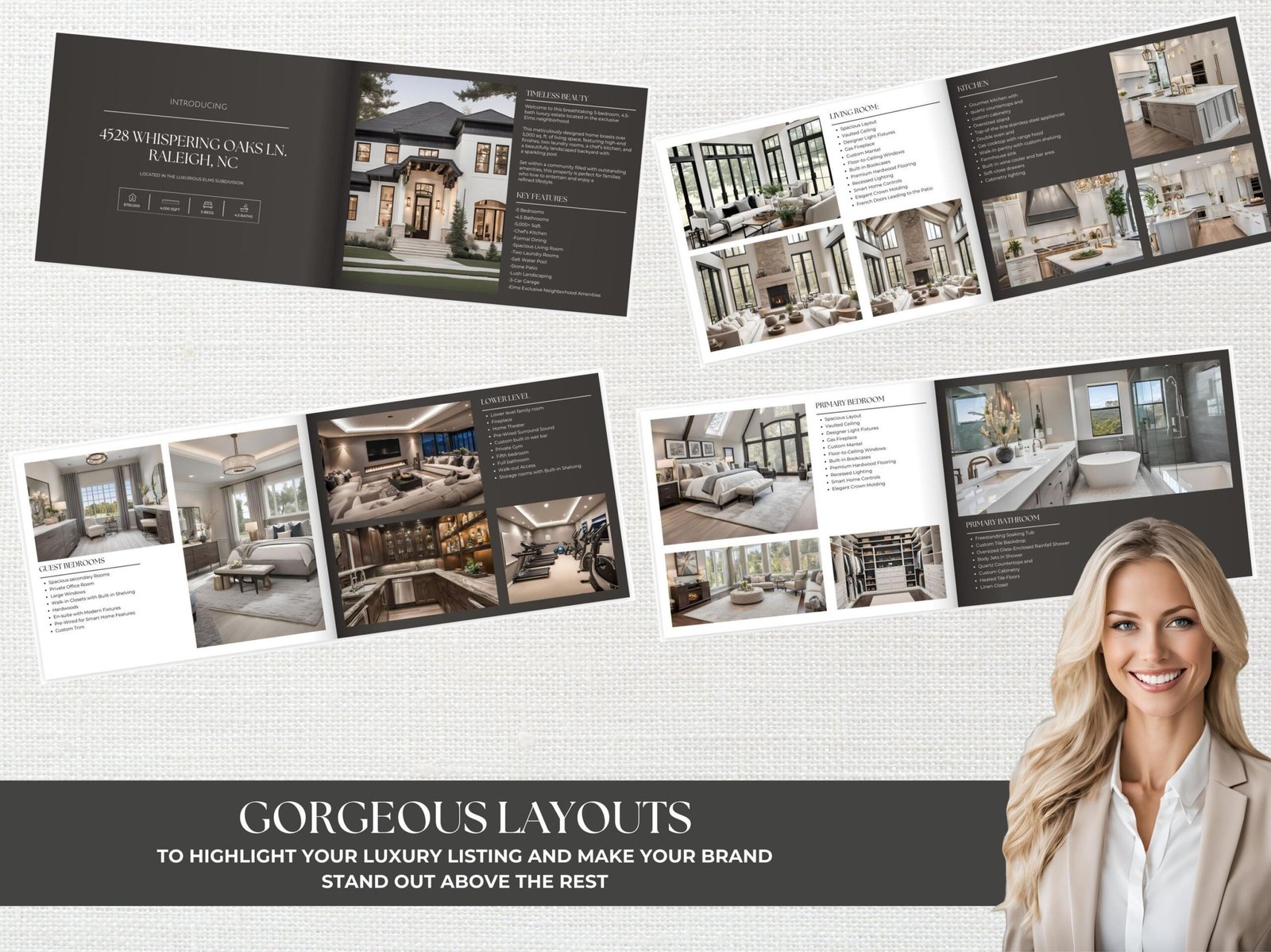
Why Realtor Branding Matters in Property Marketing
Your clients may remember the property they saw online, but they also need to remember who showed it to them.
A strong Realtor brand gives your marketing a visual and emotional identity.
That does not mean putting your logo on every square inch of a photograph. In fact, excessive branding can make real estate images feel more like advertisements than property presentations.
Instead, your brand can appear through consistent choices.
You might become known for:
- Clean, modern property presentations
- Warm and inviting interiors
- Luxury-focused marketing
- Family-friendly homes
- Contemporary urban properties
- New construction
- Vacant-home transformations
Virtual staging can help reinforce that positioning.
And there is evidence that visual presentation matters. In NAR’s 2025 Profile of Home Staging, 83% of buyers’ agents said staging made it easier for buyers to visualize a property as their future home.
That finding relates to staging generally, not virtual staging specifically. Still, it highlights an important principle: how you present a property can influence how easily buyers understand it.
How Virtual Staging Can Become Part of Your Realtor Brand
Your brand does not have to be complicated.
You can create recognizable patterns in your visual marketing without making every listing look identical.
Choose a Consistent Visual Direction
Start by deciding what you want your marketing to communicate.
Do you want it to feel:
- Modern?
- Sophisticated?
- Warm?
- Minimalist?
- Family-oriented?
- Luxury-focused?
- Fresh and contemporary?
You do not have to use exactly the same furniture in every listing.
Instead, establish a general design philosophy.
For example, a Realtor specializing in upscale homes might consistently use sophisticated, uncluttered virtual staging with premium-looking furniture and restrained décor.
A Realtor specializing in suburban family homes might use comfortable sofas, practical dining spaces, home offices, and warm bedrooms.
The individual furniture changes.
The brand feeling remains.
Create a Recognizable Color Approach
Color can become a subtle branding tool.
You might favor neutral walls and furniture with small amounts of warm wood, muted blue, or natural green.
The goal isn’t to force your favorite color into every photograph.
Instead, think about creating a visual rhythm.
When someone sees several of your listings over time, the images should feel like they came from the same marketing professional.
Develop a Signature Staging Style
Perhaps your signature is clean contemporary furniture.
Maybe it is modern luxury.
Maybe it is Scandinavian simplicity.
Whatever you choose, document it.
Create a simple internal style guide covering:
- Preferred furniture styles
- Color direction
- Décor level
- Photography composition
- Lighting preferences
- Typical room layouts
- Acceptable accessories
Now you have something repeatable.
That is where virtual staging becomes more powerful as a branding tool.
How Should Realtors Do It?
This is where the strategy gets interesting.
Instead of treating virtual staging as a one-off service for an empty room, you can make it part of your overall marketing system.

Use Virtual Staging to Define Your Market Position
Your visual presentation can tell potential clients what type of Realtor you are before they ever contact you.
Suppose you consistently market modern condos with clean, sophisticated interiors.
Over time, prospects may begin to associate you with modern urban properties.
Or perhaps you focus on new construction.
Your virtual staging can consistently demonstrate furniture layouts, family living spaces, home offices, and contemporary interiors.
Your images become part of your sales pitch.
You are essentially saying, without saying it:
“This is the kind of real estate marketing I provide.”
Create a Consistent Look Across Multiple Listings
Imagine visiting a Realtor’s website and seeing 12 listings.
Each one has completely different photography, staging, colors, and visual quality.
Now compare that with a Realtor whose listings have a consistent level of presentation.
The second experience can feel more intentional.
Consistency creates recognition.
Recognition creates familiarity.
And familiarity can make your marketing easier to remember.
Use Staging to Support Your Personal Brand—Not Replace It
Your brand is not the furniture.
Your brand is the expertise behind the marketing.
Virtual staging should support your positioning, not become the entire identity of your business.
Your name, professional photography, property descriptions, videos, website, social media, and client experience should all tell the same story.
Virtual staging is one piece of that larger puzzle.
Use Virtual Staging to Create Branded Before-and-After Content
Before-and-after content can be particularly useful for Realtor marketing.
Why?
Because the transformation is immediately understandable.
You don’t need a long explanation.
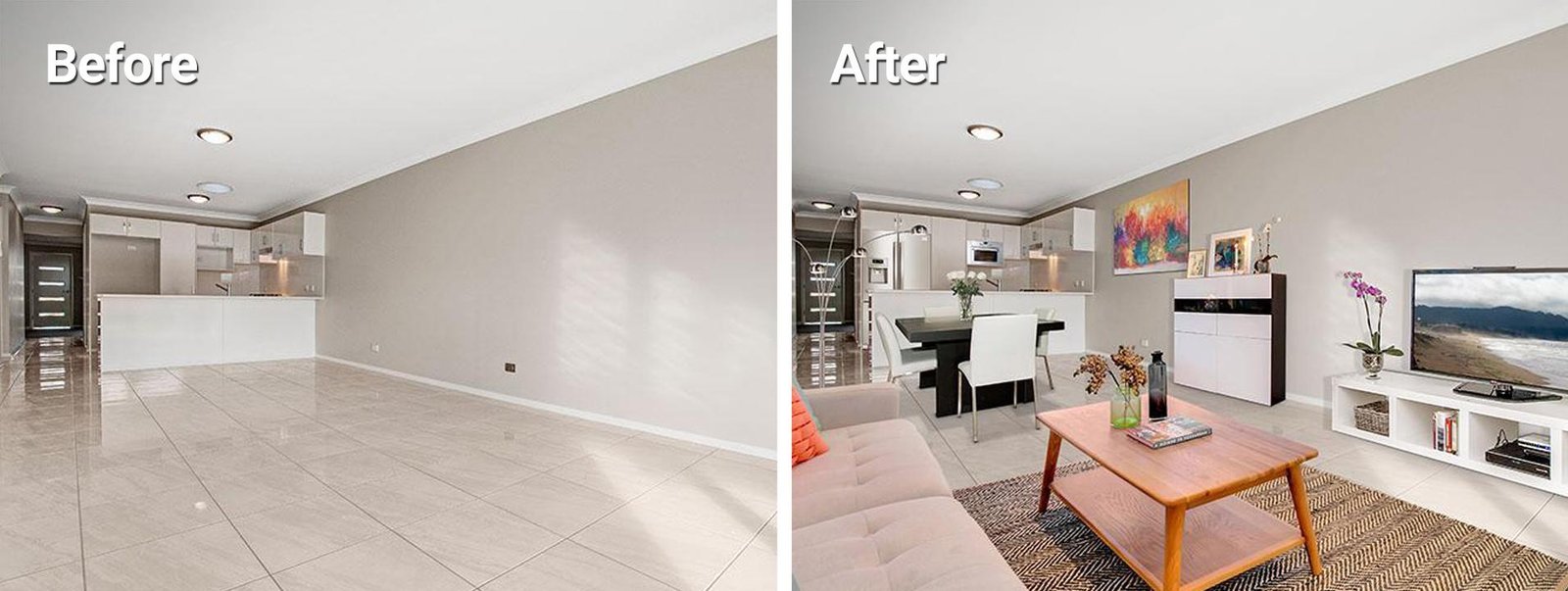
The original image shows the actual empty room.
The staged image demonstrates one realistic way to use it.
Show Your Marketing Expertise
A before-and-after post can demonstrate more than the room.
It can demonstrate your approach to marketing.
For example, you could show:
Before: Empty living room
After: Professionally styled contemporary living room
Then explain why the furniture placement works.
You are no longer simply showing a house.
You are showing potential sellers how you market properties.
Turn One Listing Into Multiple Social Posts
One property can produce a surprisingly large amount of content.
For example:
- Living room transformation
- Primary bedroom transformation
- Basement transformation
- Home office concept
- Design-style comparison
- Original versus staged image
- Short video walkthrough
Seven pieces of content from one property?
That’s much more useful than posting the same “Just Listed” graphic seven times.
Make Your Expertise Visible
People cannot always see your marketing work behind the scenes.
Virtual staging gives you something tangible to demonstrate.
You can show prospects exactly how you think about presentation, room function, buyer psychology, and visual storytelling.
That can be especially useful when trying to win new listings.
How Realtors Can Use Virtual Staging to Build a Luxury Brand
Luxury branding requires more than adding expensive-looking furniture.
It is about restraint.
Focus on Quality Over Quantity
A luxury listing does not need 15 decorative objects on a coffee table.
Often, fewer elements create a more sophisticated appearance.
Use carefully selected furniture, artwork, lighting, and accessories.
Let the architecture breathe.
Match the Property’s Price Positioning
A modest townhouse should not necessarily be presented like a $5 million estate.
Likewise, a high-end custom home may require a more elevated visual treatment.
Your staging should make sense for the property.
Let Architectural Features Remain the Star
If a property has dramatic windows, a fireplace, custom millwork, or a beautiful staircase, don’t cover those features with furniture.
The staging should act like supporting actors.
The property gets the starring role.
How Realtors Can Use Virtual Staging for Different Property Types
One advantage of virtual staging is flexibility.
Your brand can remain consistent while your staging adapts to the property.
For Vacant Homes
Use furniture to establish scale and room function.
An empty 20-by-15-foot living room can be difficult to understand in a photograph. A properly arranged seating area can make the dimensions much more obvious.
For New Construction
Show buyers how the finished property could feel.
You can create visual concepts for living rooms, bedrooms, dining areas, offices, and basements without physically furnishing every home.
For Luxury Properties
Use sophisticated furniture and restrained décor that complement the architecture.
For Family Homes
Focus on livability.
Show practical seating, dining, bedrooms, storage concepts, and home-office possibilities.
Your staging changes.
Your commitment to clear, professional presentation does not.
Create a Realtor Brand Style Guide for Virtual Staging
If you want consistency, write down your rules.
You don’t need a 50-page branding manual.
A one-page guide can be enough.
Include:
Preferred Design Styles
List two or three primary styles you commonly use.
For example:
- Contemporary
- Modern luxury
- Transitional
Preferred Color Direction
Choose a general palette rather than one rigid color.
For example:
- Warm neutrals
- Natural wood
- Soft gray
- Muted accent colors
Furniture Guidelines
Specify preferences for:
- Sofa shapes
- Dining tables
- Bedroom furniture
- Rugs
- Lighting
- Artwork
Photography Guidelines
Keep your property photography consistent in:
- Aspect ratio
- Camera perspective
- Image quality
- Brightness
- Editing style
This guide becomes your quality-control checklist.
How Virtual Staging Can Strengthen Your Website and Social Media Brand
Your website should feel like your digital office.
Your social media should feel like an extension of it.
Virtual staging can help both feel more cohesive.
Build a Portfolio of Your Work
Create a dedicated staging or marketing section on your website.
Show original photographs beside finished concepts where appropriate.
This gives prospective sellers something concrete to evaluate.
Create Repeatable Social Media Templates
You could create simple templates for:
- Just Listed
- Before & After
- Room Transformation
- Design Concept
- Property Spotlight
- Coming Soon
Keep fonts, spacing, and overall presentation consistent.
Use Video to Extend the Brand
A virtually staged image can also become the starting point for short-form video content.
For example, you might create a 10-second living-room transformation video and use it on social media.
Now your branding isn’t limited to still images.

How to Avoid Making Your Realtor Brand Look Artificial
Consistency is useful.
Over-branding is not.
Don’t Make Every Property Look Identical
A downtown condo and suburban family home should not look like twins.
Allow the property’s architecture and target buyer to influence the staging.
Don’t Use Unrealistic Furniture
If the furniture does not fit, the image loses credibility.
Scale matters.
Don’t Hide the Actual Property
NAR’s current Code of Ethics states that REALTORS® should avoid misrepresentation or concealment of pertinent facts and should present a true picture in advertising and marketing. It specifically addresses misleading images and Internet content.
So use virtual staging to explain possibilities—not to disguise reality.
Clearly identify digitally staged images and follow the MLS and brokerage rules that apply to your listing.
Don’t Let Your Logo Dominate the Photograph
Your personal brand should be recognizable without covering the property with oversized logos and contact information.
Let the home attract attention.
Let your overall marketing system build recognition.
How to Build a Simple Realtor Virtual Staging Branding Workflow
You can turn this into a repeatable process for every listing.
Step 1 — Identify Your Brand Style
Decide what visual impression you want prospects to associate with your business.
Step 2 — Identify the Rooms That Need Staging
Prioritize the rooms where furniture will make the biggest difference.
NAR’s 2025 research found that living rooms, primary bedrooms, and kitchens were among the most important spaces from the buyer-agent perspective.
Step 3 — Apply Your Brand Guidelines
Use your preferred staging style, color direction, furniture approach, and photography standards.
Step 4 — Check the Images Carefully
Before publishing, verify:
- Architecture
- Furniture scale
- Perspective
- Shadows
- Lighting
- Room function
- Overall realism
Step 5 — Repurpose the Content
Use the approved images across appropriate channels:
- Website
- Listing presentation
- MLS
- YouTube
- Digital advertising
- Property brochures
One professionally prepared image can have a much longer marketing life than a single listing post.
How to Measure Whether Virtual Staging Is Strengthening Your Brand
Branding can feel intangible, but you can still watch for useful signals.
Track Listing Engagement
Depending on the platform, monitor views, saves, shares, inquiries, and showing requests.
Don’t assume that virtual staging caused every change. Real estate performance depends on many variables, including price, location, market conditions, property condition, and photography.
Watch for Repeat Recognition
Do prospects mention your marketing?
Do sellers comment on the quality of your listing presentation?
Do people recognize your listings on social media before reading your name?
Those can be valuable signs that your visual identity is becoming recognizable.
Measure New Listing Opportunities
One of the biggest branding questions is simple:
Does your marketing help convince homeowners that you can market their property professionally?
If your virtual staging portfolio helps demonstrate that capability during listing presentations, it can become a business-development asset—not just a property-marketing tool.
7 Practical Tips for Using Virtual Staging as a Realtor Branding Tool
Keep these seven principles in mind:
- Create a recognizable visual direction.
- Use consistent design principles rather than identical furniture.
- Match staging to the property’s architecture and market position.
- Create before-and-after content to demonstrate your expertise.
- Repurpose staged images across multiple marketing channels.
- Keep every digitally staged image realistic and transparent.
- Let the property remain the star while your marketing builds recognition.
Conclusion: Turn Your Listing Images Into a Signature
Your Realtor brand is built one interaction at a time.
A listing photograph may seem like a small part of your business, but multiply that photograph by 20 listings, 100 social posts, dozens of emails, and countless website visits. Suddenly, your visual presentation becomes a significant part of how prospects experience your brand.
That is why virtual staging can be more than a way to furnish an empty room.
Used strategically, it can become part of your visual signature.
You can use it to communicate your market position, demonstrate your marketing expertise, create reusable content, and give buyers a clearer understanding of each property.
But don’t chase a cookie-cutter look.
Build consistency without sacrificing authenticity.
Let your staging style support the property. Let your photography document the reality. Let your marketing demonstrate your expertise.
When buyers and sellers can recognize the quality of your work before they even see your name, your virtual staging has become more than decoration—it has become branding.
FAQs About Virtual Staging for Realtor Branding
1. Can virtual staging really help build a Realtor’s personal brand?
Yes, it can contribute to your visual identity when you use consistent design principles across your marketing. Virtual staging should be one part of a broader brand system that includes your photography, website, social media, videos, listing presentations, and client experience.
2. Should every listing use the same virtual staging style?
No. Consistency is useful, but every property has its own architecture, location, price point, and likely buyer. Use your brand guidelines as a foundation while adapting the staging to each property.
3. How can I use virtual staging to attract more seller clients?
Create a portfolio showing how you present properties. Before-and-after images can be particularly effective because they demonstrate your marketing process visually. You can incorporate these examples into listing presentations, your website, social media, and seller consultations.
4. Should I put my logo directly on virtually staged property images?
Usually, keep branding subtle. Your logo and contact information can appear in appropriate marketing materials, but covering the property photograph with large branding elements can distract from the home. Your overall visual consistency should do much of the branding work.
5. Can virtual staging make my Realtor marketing look more professional?
It can help create a more polished and consistent presentation, particularly when you’re marketing vacant or difficult-to-visualize spaces. But quality control matters. Unrealistic furniture, incorrect proportions, altered architecture, or misleading images can undermine the professional impression you are trying to create.